|
Children need.
. . THIS?
(It's EXPERTISE?)
Research: Incest in America
Overblowing the Child Suggestibility Research This web page is http://www.thelizlibrary.org/liz/memory-research.html standards and practices in child custody evaluations
liz says: read Melissa Farley's 2005 response to Debbie Nathan's article "Oversexed". ---
"[T]he case was not exclusively limited to the validity of the theory of dissociative amnesia because the victim was never actually diagnosed with that disorder. Instead, the jury were entitled to... find that the victim had remembered the sexual abuse in reliable detail. The Commonwealth further argues that, at a minimum, the state of the evidence changed with Dr. Loftus's testimony that, notwithstanding her view that the underlying theory of dissociative amnesia had not been scientifically validated, it was nonetheless plausible that a person could forget a traumatic event and then remember it through the processes involved with ordinary memory. 
"[FN18] ...'[T]he Court rejects any suggestion that the relevant scientific community generally accepts the notion that the fact that false memories may be created in some individuals invalidates the conclusion that dissociation and recovered memory occur in others. In any event, whether one or the other is at work [in this case] is for the jury to decide...'" --- November 14, 2007: Loftus testimony barred; Judge denies new trial request for wife-beater "Rejecting claims prosecutors hid evidence while a key defense witness was improperly barred from testifying, a McHenry County judge Tuesday denied a new trial for prominent businessman Billy J. Cox on charges he tried to kill his wife. Cox instead faces a Friday sentencing hearing, where the noted scientist and business founder from Bull Valley faces 12 to 60 years in prison for a brutal, near-fatal attack on his wife in 2004. ...The defense also claimed that Condon erred by barring testimony from psychologist Elizabeth Loftus, a nationally recognized expert on memory and how suggestion can create false memories..."
Wall Street Journal blog and reader comments about repressed memories and recovered memories http://blogs.wsj.com/informedreader/2007/10/11/when-the-psychiatric-cure-is-the-disease/ Jennifer Hoult, "Remembering Dangerously" & Hoult v. Hoult: The Myth of Repressed Memory that Elizabeth Loftus Created (2005), available at http://www.rememberingdangerously.com --- October 26, 2006: "blistering" cross-x, flawed research -- Memory expert taken to task in Libby hearing; Special counsel causes witness to question her own research "...Fitzgerald's blistering, nearly three-hour, questioning of Loftus caused her to admit that some of her own findings about what juries know about memory were faulty and that some of her own research may have been flawed..." See http://www.pdsdc.org/resources/eyeID_binder/Beyond_the_Ken-Schmechel_et_al.pdf News story at http://www.msnbc.msn.com/id/15432154/from/RS.3/ Loftus-Fitzgerald transcripts 1, 2, 3. REFERENCES Schmechel, R., O'Toole, T., Easterly, C. and Loftus, E. Beyond the Ken? Testing Jurors' Understanding of Eyewitness Reliability Evidence, 46 Jurimetrics J. 177-214 (2006). Loftus, E. (2006, October 26). Motion hearing before the Honorable Reggie B. Walton; Elizabeth Loftus, Witness for the Defendant. United States v. Libby; docket No. 05-394 (RBW); October 26, 2006; United States District Court for the District of Columbia. --- February 17, 2005: Loftus' Luster Lost; Controversial professor is latest UCI employee associated with pedo-priests "...Coakley wouldn't speculate on why Loftus agreed to work for Shanley in the first place... one of the most notorious figures of the Boston Archdiocese sex-abuse scandal, a man who publicly spoke on the virtues of man-boy love and was present at a meeting that would spark the creation of the North American Man-Boy Love Association (NAMBLA). And Rooney had previously successfully tried John Geoghan, the former Boston priest whose predilection for raping children ultimately brought down Cardinal Bernard Law... Loftus' involvement with Shanley will most likely be remembered as the latest UCI connection to the Catholic sex-abuse scandal. The journalist who outed Shanley as an advocate of pedophilia was former Weekly contributor Daniel C. Tsang, who would go on to become a librarian at UCI during the 1990s. Tsang's 1979 article "Men & Boys: The Boston Conference" originally appeared in the magazine Gaysweek and was introduced as evidence in a 2002 civil suit against Shanley. And as previously revealed in the Weekly, Louis Gottschalk, professor emeritus and founding chairman of UCI's Department of Psychiatry and Human Behavior, was the personal psychologist to former Mater Dei and Santa Margarita High Principal Michael Harris [see "Personnel Bile," Feb. 3]. According to sources who spoke to the Weekly on condition of anonymity, Harris would steer many of his victims toward Gottschalk when they sought solace from Harris' systematic abuse..." Story at http://www.ocweekly.com/news/ex-cathedra/loftus-luster-lost/15044/y --- More at http://www.leadershipcouncil.org/1/lg/taus.html and http://www.leadershipcouncil.org/1/tm/tm.html --- Child Custody
Evaluators on Elizabeth Loftus and False Memory Theory [ANONYMOUS LISTSERVE COMMENT]:
"Not only do the results fail to justify the conclusion, but the implication
of the results - namely, that false abuse memories are easily created -
is a misrepresentation of the data which is arguably unethical - which,
I understand, is why Loftus left APA before the ethical charges brought
against her reached a conclusion." (New Jersey doctorate-level MHP,
June 14, 2001).
[ANONYMOUS LISTSERVE COMMENT]:
"I'm posting an LA Times article about Loftus, her actions in a former
child custody case, and a CA
Appellate decision. I'm trying to find out if the currently "unpublished"
opinion should be disseminated, and I'm also trying to get a copy of the
letter filed by a number of psychologists seeking a CA Supreme Court Review.
Some of what she did makes me uncomfortable, but some of what Corwin did
also concerns me. I've been asked to comment on whether more of us should
become involved, and I'm seeking some feedback on that issue - and the
case in general, if any of you know more about it." (California doctorate-level
political activiooops, MHP, June 22, 2005).
ARE FALSE MEMORY SYNDROME CLAIMS EMPIRICALLY BASED? by Kenneth S. Pope, Ph.D., ABPP, and other recommended articles FALSE MEMORY SYNDROME FOUNDATION: A REMEDY FOR A NONEXISTENT PROBLEM, by Judith M. Simon. ALTERNATE URL False Memory Syndrome (FMS) purportedly arises from "recovered memory therapy," a theoretical practice said to be capable of creating memories of childhood sexual abuse in psychotherapy patients. The "diagnosis" of FMS was introduced in 1992 by Pamela Freyd... and her husband Peter... after their daughter... privately confronted them with memories of incest perpetrated by her father..." FALSE MEMORY SYNDROME, by Juliette Cutler Page, and more...
"LOST IN A SHOPPING MALL" -- A Breach of Professional Ethics, by Lynn S. Crook and Martha C. Dean. The "lost in a shopping mall" study has been cited to support claims that psychotherapists can implant memories of false autobiographical information of childhood trauma in their patients. An analysis of the mall study shows that beyond the external misrepresentations, internal scientific methodological errors cast doubt on the validity of the claims that have been attributed to the mall study within scholarly and legal arenas. TAUBMAN CENTER: RECOVERED MEMORIES
CONFRONTING THE UNETHICAL FORENSIC COLLEAGUE, by Brodsky and McKinzey. Brodsky, S. L. & McKinzey, R. K., (2002). The Ethical Confrontation of the Unethical Forensic Colleague. Professional Psychology: Research & Practice, 33, 307-309. "In the course of clinical and forensic work, psychologists sometimes discover serious weaknesses in knowledge, performance, or ethics in other psychologists' work. The APA ethical code mandates confronting such a psychologist prior to making a professional complaint. This mandatory confrontation typically is omitted because of a sense of awkwardness or a fear of insulting the other psychologist. Education and training in psychology does not cover this sensitive and important area. In this article, we suggest sample templates for an exchange of letters to meet that ethical requirement and to begin to resolve problem behaviors by colleagues." CURING THE THERAPEUTIC STATE, by Thomas Szasz. The medicalization of American life. PSYCHOLOGY ETHICS: Articles, reprints, research, and resources online written or collected by Kenneth S. Pope, Ph.D., and other recommended articles
REEVALUATING THE EVALUATORS: Rethinking the Assumptions of Therapeutic Jurisprudence in the Family Courts WHAT ARE THE EFFECTS OF CHILD ABUSE, liznotes
AMERICA'S SCHOOLCHILDREN TREATED LIKE LAB RATS, by John W. Whitehead "In almost every state across the nation, schoolchildren are being subjected to behavioral exams and mental health tests, often without their parents' knowledge or consent... One such program is the Youth Risk Behavior Surveillance System (YRBSS). Currently used in at least 45 states, the YRBSS test takes approximately 35 minutes to complete, with questions on everything from how much television the student watches to thoughts on suicide, sexual activity and drug use. For example, the 2007 middle school questionnaire includes such questions as: "Have you ever seriously thought about killing yourself?" ... "The last time you had sexual intercourse, did you or your partner use a condom?"...[C]ritics of these risk assessment tests insist that they're aimed at pushing antidepressant drugs..."
|
SITE INDEX
| LIZNOTES
MAIN PAGE | COLLECTIONS
| WOMENS
HISTORY LIBRARY | RESEARCH ROOMS
| THE READING ROOM
FATHERLESS CHILDREN STORIES
| THERAPEUTIC JURISPRUDENCE
| WOMAN SUFFRAGE
TIMELINE | THE LIZ LIBRARY
ENTRANCE
Except
as otherwise noted, all contents in this collection are copyright 1996-2011
the liz library. All rights
reserved.
This site is hosted and maintained by argate.net
Send queries to: sarah-at-thelizlibrary.org
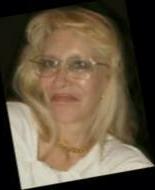 May 10, 2010: Journalist Debbie Nathan, 59, false memory syndrome true believer, and famed defender of the "sex work industry", claims she was
raped in a busy NYC park in February in broad daylight by a virgin teenage boy.
Multiple police officers report the incident otherwise after, apparently, a two-hour interview,
but Nathan convinces Manhattan D.A. that Nathan's version of the events is correct; he gets NYPD to apologize. Whoa. What's good for the goose, not? Hypocrisy? Enlightenment?
Story in The Village Voice blogs at http://blogs.villagevoice.com/runninscared/archives/2010/05/nypd_forced_to.php
May 10, 2010: Journalist Debbie Nathan, 59, false memory syndrome true believer, and famed defender of the "sex work industry", claims she was
raped in a busy NYC park in February in broad daylight by a virgin teenage boy.
Multiple police officers report the incident otherwise after, apparently, a two-hour interview,
but Nathan convinces Manhattan D.A. that Nathan's version of the events is correct; he gets NYPD to apologize. Whoa. What's good for the goose, not? Hypocrisy? Enlightenment?
Story in The Village Voice blogs at http://blogs.villagevoice.com/runninscared/archives/2010/05/nypd_forced_to.php